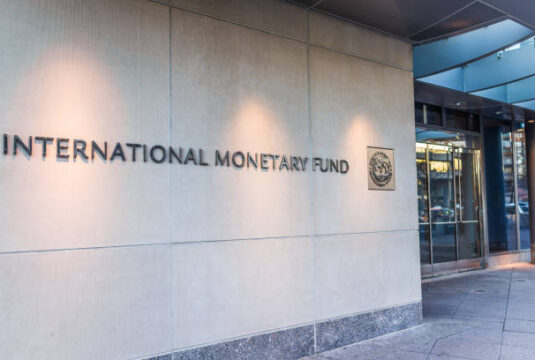
IMF, Stakeholders Double Down on Governance as Critical to Economic Stability
A statement from Transparency International U.S.
April 20, 2026
Washington, D.C. – Last week, the International Monetary Fund (IMF) and the World Bank convened for the 2026 Spring Meetings. The meetings occurred against the backdrop of a turbulent global economy, aggravated by war in the Middle East and disruptions to the energy supply chain. IMF Managing Director Kristalina Georgieva predicted a further rise in global debt levels that will disproportionally affect low- and middle-income countries. Public debt has been growing twice as fast in developing countries since 2010, and 46 of those countries now spend more servicing their debt than on either their health or education budgets.
During the Spring Meetings, Dan Katz, First Deputy Managing Director of the IMF stated that,
…[C]orruption, money laundering, and other financial crimes are macrocritical. They drain public resources, distort markets, and erode confidence in the financial system, threatening economic growth and stability. Safeguarding financial integrity is foundation to the IMF’s broader mission of promoting economic growth and stability.
Yan Liu, General Counsel and Director of the Legal Department at the IMF, reinforced this recognition stating that,
When corruption and illicit financial flows really impair core state functions, they undermine the foundations of economic performance, whether it is investment, human capital or productivity. In most serious cases, the pervasive mistrust in governments can spill into social unrest and conflicts with devastating economic and social consequences. So the bottom line is clear, safeguarding economic integrity through combating corruption and illicit financial flows is not optional.
On the sidelines of the 2026 Spring Meetings, Transparency International U.S. (TI US) hosted a virtual panel discussion on the need for the IMF to strengthen governance and anti-corruption provisions in its lending programs. The panel, titled “U.S. Stakeholders to IMF: Galvanize Governance for Growth,” was moderated by Kristen Sample, Governance Director at the National Democratic Institute, and featured a distinguished group of experts: Gary Kalman, Executive Director of TI US; Elizabeth Shortino, Former U.S. Executive Director to the IMF; Eamon Aghdasi, Sovereign Analyst, Emerging Market Debt at GMO; and Maheshi Herat, Executive Director of Transparency International Sri Lanka. Some key moments from the discussion included:
The IMF has made a lot of progress, but there are countries where the governance measures and the requests around data and debt transparency could have been stronger. It needs to be a priority of the IMF consistently — and engagement and pressure from the outside is always helpful. Elizabeth Shortino, former U.S. Executive Director to the IMF.
Simply knowing how much a country owes in terms of its public debt, and to whom, is not given. The countries that are most transparent about what they owe, and to whom, tend to be the ones that enjoy lower financing costs and lower sovereign risk… Regulatory quality, government effectiveness, and control of corruption are highly predictive of country risk. Eamon Aghdasi, Sovereign Debt Analyst, GMO Emerging Markets Debt.
There needs to be a conscious effort on the part of the government, the IMF, and civil society to fine-tune and identify these benchmarks, the criteria for completion, and what success looks like — well in advance. You need to have a plan of action to monitor them more closely, perhaps more than the economic criteria. Maheshi Herat, Executive Director, Transparency International Sri Lanka, on the design and implementation of governance benchmarks in her country.
This multistakeholder push was joined by U.S. Treasury Secretary Scott Bessent in a statement provided for the Spring Meetings which included,
The United States also expects the IMF to advance reforms and structural benchmarks that strengthen borrower accountability in program implementation. In a more constrained external financing environment, the IMF should promote domestic revenue mobilization, better governance, and policies that support durable, private sector-led growth.
Just prior to the Spring Meetings, Secretary Bessent issued a statement listing U.S. priorities for the G20 Finance Track that included debt transparency. The U.S. holds the presidency of this year’s G20. Citing multiple and recurring mentions of governance in development finance in separate fora, TI US’s Kalman noted,
The throughline of accountability in development financing is emerging as a key concern to watch in a time of falling foreign aid budgets across many donor countries.
Related Resources
- Watch the recording of Stakeholders to IMF: Galvanize Governance for Growth;
- Read a TI US factsheet, Aligning IMF Policies with U.S. Economic and Strategic Interests.
Media Contact
Victoria Brusa, Transparency International U.S.
Email: vbrusa@us.transparency.org
Phone: +1 771 250-8065 / +54 9 3492 652098 (WhatsApp)
X: @TransparencyUSA